
Begin of page section:
Page sections:

  • Go to contents (Accesskey 1)
  • Go to position marker (Accesskey 2)
  • Go to main navigation (Accesskey 3)
  • Go to sub navigation (Accesskey 4)
  • Go to additional information (Accesskey 5)
  • Go to page settings (user/language) (Accesskey 8)
  • Go to search (Accesskey 9)

End of this page section. Go to overview of page sections

Begin of page section:
Page settings:

English en
Deutsch de
Search
Login

End of this page section. Go to overview of page sections

Begin of page section:
Search:

Search for details about Uni Graz
Close

End of this page section. Go to overview of page sections


Search

Begin of page section:
Main navigation:

Page navigation:

  • University

    University
    • About the University
    • Organisation
    • Faculties
    • Library
    • Working at University of Graz
    • Campus
    Developing solutions for the world of tomorrow - that is our mission. Our students and our researchers take on the great challenges of society and carry the knowledge out.
  • Research Profile

    Research Profile
    • Our Expertise
    • Research Questions
    • Research Portal
    • Promoting Research
    • Research Transfer
    • Ethics in Research
    • Commission for Scientific Integrity
    Scientific excellence and the courage to break new ground. Research at the University of Graz creates the foundations for making the future worth living.
  • Studies

    Studies
    • Prospective Students
    • Students
  • Community

    Community
    • International
    • Location
    • Research and Business
    • Alumni
    The University of Graz is a hub for international research and brings together scientists and business experts. Moreover, it fosters the exchange and cooperation in study and teaching.
  • Spotlight
Topics
  • Sustainable University
  • Researchers answer
  • Work for us
Close menu

End of this page section. Go to overview of page sections

Begin of page section:
You are here:

University of Graz Natural sciences News Daten deuten: Warum Studien manchmal falsch liegen
  • About the faculty
  • Our research
  • Study Service
  • Dean's office
  • Personalities
  • Institute of Biology

End of this page section. Go to overview of page sections

Thursday, 09 April 2026

Interpreting data: Why studies sometimes get it wrong

Pedestrians on pedestrian crosswalk. Top view.

Data from surveys in the social sciences can be interpreted in very different ways. Researchers in Graz are calling for greater transparency regarding methodology. Photo: Adobe Stock/Dmytro

Hilmar Brohmer and Ziva Korda from the Institute of Psychology, together with 500 international colleagues, have re-evaluated a hundred scientific publications and have often come to different conclusions.

When are people willing to pay for environmental protection? How can students be motivated to perform better? Is there a connection between poverty and the reporting of criminal offences? Social scientists collect and analyse data in surveys or field studies for such investigations. However, the results are not always replicable. This was revealed in a recent publication in the scientific journal Nature, written by 500 experts of the SCORE collaboration. Co-authors Hilmar Brohmer and Ziva Korda from the Department of Psychology explain why this is the case and how studies can be improved.

How reliable are studies in the social and economic sciences?
Ziva Korda: In our current analysis, we only came to exactly the same results in 27 per cent of the newly evaluated studies. However, we were able to draw the same conclusions as the authors of the original publications in three quarters of them.

What is the reason for the different results?
Hilmar Brohmer: We only had the original studies with the conclusions and the underlying data - this was clearly not enough to fully understand the scientists' thought processes. For example, if they also provided their specific analysis scripts, it would be much easier to reconstruct how their decisions came about.

How do you decide which result is the correct one? Or are they all equally valid?
Korda: Many analysis options basically produce justifiable and sensible results. Do you take outlier values into account or not? Do you combine similar variables or do you look at them individually? This is precisely the problem: how do you avoid a random result? In our research project, we provide an answer to this question in principle: we report a spectrum of several possible alternatives.

Can your findings also be transferred to other disciplines - such as the natural sciences or medicine?
Korda: There is a crisis of reproducibility in many areas. This means that repeat studies produce different results. One reason for this is that only a minority of researchers disclose their data and the specific steps they take to analyse them. This is of course particularly critical when, for example, new procedures are being tested in the health sciences or when biomedical data are later to serve as the basis for the development of drugs. It is precisely in such fields that we want the evidence from basic research to be truly reliable.

Can consumers rely on scientific studies at all?
Brohmer: Basically, scientifically generated findings are the best verified knowledge. Before a new drug is launched on the market, it undergoes several years of extensive testing. Before the discovery of a new elementary particle is announced, its existence has to be confirmed several times through precise experiments. But in the social sciences, standards are often too lax. Findings from individual studies based on small samples should therefore not be regarded as the last word in wisdom until they have been properly replicated.

What conclusions can be drawn from your study?
Brohmer: There needs to be significantly more transparency throughout the entire research process. Scientists should make their materials and methods accessible to other colleagues in repositories. They should also disclose their ideas and planned steps in advance. Less than a fifth of early career researchers do this systematically. Therefore, the low reproducibility rates are not really surprising. At the university, we are discussing these issues in the Graz Open Science Initiative. We would be happy if more interested parties joined in and contributed their experiences.

How did the idea for this study come about and how did you both come to work on it?
Korda: We had already been active in the community for some time through various open science projects. That's why we were asked whether we wanted to test the robustness of the research in a large-scale reanalysis. That seemed sensible to us. It should also be noted that the organisation of large study projects has improved significantly since Covid.


Publications:
Aczel, B. et al : Investigating the analytical robustness of the social and behavioural sciences, Nature 652, 2026.
DOI: 10.1038/s41586-025-09844-9
Brohmer, H., & Hoffmann, M. F. (2025). The struggle to make transparency mainstream: initial evidence for a slow uptake of open science practices in PhD theses. Royal Society Open Science, 12(10), 250826. 
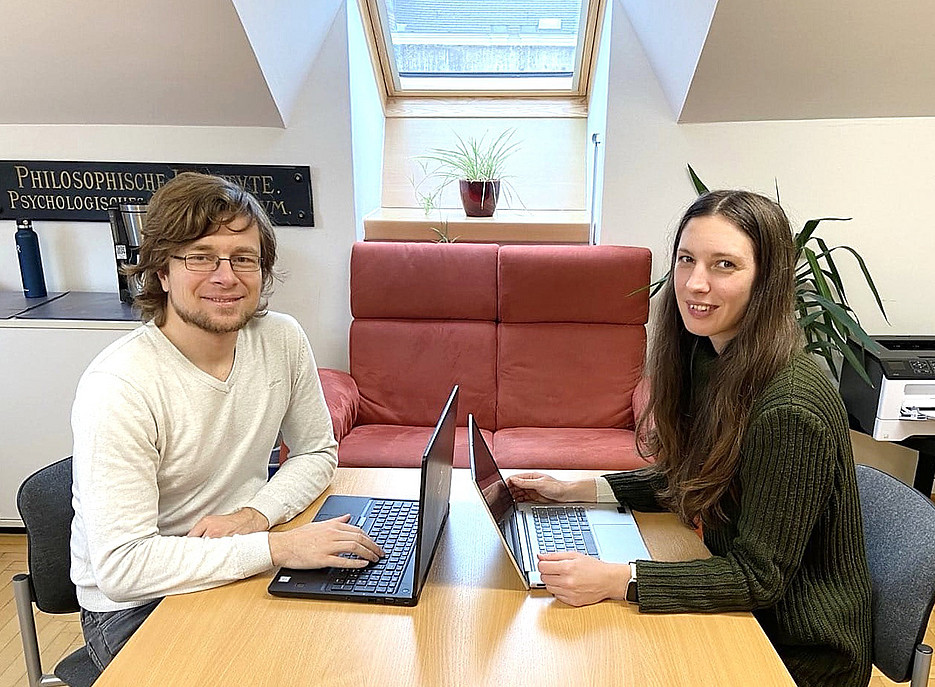
 

Hilmar Brohmer and Ziva Korda are sitting opposite each other at a desk.
Hilmar Brohmer and Ziva Korda have examined the reliability of scientific studies.
white space without content
created by Dagmar Eklaude

Related news

Learning better: Can science experiments in group settings help children with autism?

How can pupils with autism spectrum disorder (ASD) have positive learning experiences and improve their social skills? Researchers at the University of Graz are investigating how science experiments in group settings can contribute to this. Initial results from the project, which is funded by the Austrian Science Fund FWF, show that children react differently depending on the kind of neurodiversity, but that experimentation classes with the right setting definitely have potential. "Pupils with ASD can do more than is currently expected of them in many cases," says project leader Uwe Simon.

Sustainability Award 2024 for two projects of the University of Graz

How do major international conferences reduce their carbon footprint? And what can maths lessons contribute to education for sustainable development? Two questions that were answered at the University of Graz. The corresponding projects were awarded the Sustainability Award 2024 in silver on 26 November in Vienna. This award for Austria's universities and colleges is presented by the Ministry of Science and the Ministry of Climate Protection.

Bees under observation: University of Graz provides unprecedented insights into the hive

What is going on in the combs? How many eggs is the queen laying? How much honey is there? Autonomous robots and AI algorithms provide important data and high-resolution real-time images from inside a beehive. "As part of an international team, we have developed a game-changer technology for a new type of digitalised behavioural research," reports biologist Thomas Schmickl from the Artifical Life Lab at the University of Graz. The publication, which has just appeared as the cover story in the journal "Science Robotics", describes the wealth of information that can be obtained from this unique research facility.

Research for healthy aging: FWF funds Cluster of Excellence "MetAGE" with 18 million euros

Six researchers from the Field of Excellence "BioHealth" at the University of Graz, together with colleagues from the Medical Universities of Graz and Vienna, have acquired an FWF-funded "Cluster of Excellence". Now a newly formed center of excellence will be created under the leadership of the University of Graz. The aim is to gain a better understanding of healthy aging. The findings will flow directly into clinical research.

Begin of page section:
Additional information:

University of Graz
Universitaetsplatz 3
8010 Graz
Austria
  • Contact
  • Web Editors
  • Moodle
  • UNIGRAZonline
  • Imprint
  • Data Protection Declaration
  • Accessibility Declaration
Weatherstation
Uni Graz

End of this page section. Go to overview of page sections

End of this page section. Go to overview of page sections

Begin of page section:

End of this page section. Go to overview of page sections