Begin of page section:
Page sections:

  • Go to contents (Accesskey 1)
  • Go to position marker (Accesskey 2)
  • Go to main navigation (Accesskey 3)
  • Go to sub navigation (Accesskey 4)
  • Go to additional information (Accesskey 5)
  • Go to page settings (user/language) (Accesskey 8)
  • Go to search (Accesskey 9)

End of this page section. Go to overview of page sections

Begin of page section:
Page settings:

English en
Deutsch de
Search
Login

End of this page section. Go to overview of page sections

Begin of page section:
Search:

Search for details about Uni Graz
Close

End of this page section. Go to overview of page sections


Search

Begin of page section:
Main navigation:

Page navigation:

  • University

    University
    • About the University
    • Organisation
    • Faculties
    • Library
    • Working at University of Graz
    • Campus
    Developing solutions for the world of tomorrow - that is our mission. Our students and our researchers take on the great challenges of society and carry the knowledge out.
  • Research Profile

    Research Profile
    • Our Expertise
    • Research Questions
    • Research Portal
    • Promoting Research
    • Research Transfer
    • Ethics in Research
    Scientific excellence and the courage to break new ground. Research at the University of Graz creates the foundations for making the future worth living.
  • Studies

    Studies
    • Prospective Students
    • Students
  • Community

    Community
    • International
    • Location
    • Research and Business
    • Alumni
    The University of Graz is a hub for international research and brings together scientists and business experts. Moreover, it fosters the exchange and cooperation in study and teaching.
  • Spotlight
Topics
  • Our digital Advent calendar
  • Sustainable University
  • Researchers answer
  • Work for us
Close menu

End of this page section. Go to overview of page sections

Begin of page section:
You are here:

University of Graz Natural sciences News Anis-Aroma aus der Natur
  • About the faculty
  • Our research
  • Study Service
  • Dean's office
  • Personalities
  • Institute of Biology

End of this page section. Go to overview of page sections

Monday, 25 November 2013

Anis-Aroma aus der Natur
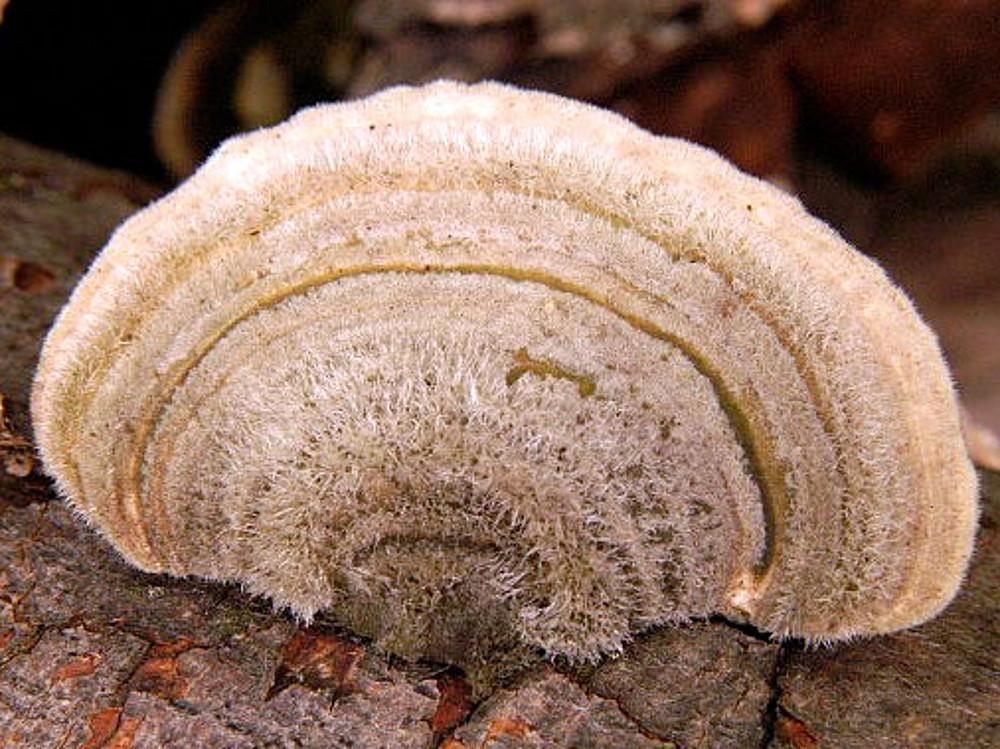
Der Pilz Trametes hirsuta liefert einen Hilfsstoff, der chemische Reaktionen beschleunigt und erleichtert.

Der Pilz Trametes hirsuta liefert einen Hilfsstoff, der chemische Reaktionen beschleunigt und erleichtert.

Einzigartige Entdeckung: Chemiker der Uni Graz nutzen Pilz für umweltfreundliche Reaktionen

Anis-Aroma fürs Weihnachtsgebäck könnte künftig günstig und umweltfreundlich aus Naturstoffen hergestellt werden: WissenschafterInnen der Karl-Franzens-Universität haben in dem Baumpilz Trametes hirsuta einen Bio-Katalysator gefunden, der chemische Reaktionen mit Luftsauerstoff und ohne Lösungsmittel ablaufen lässt. „Für die beobachtete Umsetzung benötigte man bislang eine Temperatur von -78° Celsius, Ozon sowie weitere Chemikalien“, erklärt Univ.-Prof. Dr. Wolfgang Kroutil vom Institut für Chemie der Uni Graz. Mit dem nun entdeckten Bio-Katalysator aus dem Pilz läuft dieselbe Reaktion bei 24 bis 30° Celsius mit Luftwasserstoff in einem wässrigen System ab. Sie ist also wesentlich energiesparender und umweltschonender.
Diese Entdeckung ist bislang absolut einzigartig: „In der Literatur ist weder für natürliche Vorgänge noch für die Chemie ein Enzym beschrieben, das eine ähnliche Umsetzung machen kann“, erzählt Kroutil. Daher war es für sein Team eine langwierige Aufgabe, dem Prozess auf die Schliche zu kommen. „Wir beobachteten zunächst, dass der spezielle Pilz ausgerechnet ein natürliches Fungizid, das von Bäumen abgesondert wird, besonders gut umsetzt“, schildert der Experte. Offensichtlich kann der Trametes hirsuta das natürliche Gift unschädlich machen. Wie genau diese Reaktion abläuft, konnten die ChemikerInnen nun nach intensiven Forschungen nachweisen: „Der Pilz verwendet dazu ein Enzym, das Proteine abbaut, sowie ein Metall, eine bestimmte Mangan-Art – auch das ist bislang einzigartig“, präzisiert Kroutil. Die Ergebnisse veröffentlicht das Team der WissenschafterInnen - darunter unter anderem Harald Pichler von der TU Graz - nun im Fachmagazin ChemBioChem.
Besonders hilfreich ist dieses neue Verfahren für die Herstellung von so genannten Aldehyden, chemischen Verbindungen, die unter anderem als Aromastoffe oder als Zwischenprodukte für Pharmazeutika und Agrochemikalien verwendet werden.

Link zur Publikation

created by Dagmar Eklaude

Related news

Learning better: Can science experiments in group settings help children with autism?

How can pupils with autism spectrum disorder (ASD) have positive learning experiences and improve their social skills? Researchers at the University of Graz are investigating how science experiments in group settings can contribute to this. Initial results from the project, which is funded by the Austrian Science Fund FWF, show that children react differently depending on the kind of neurodiversity, but that experimentation classes with the right setting definitely have potential. "Pupils with ASD can do more than is currently expected of them in many cases," says project leader Uwe Simon.

Sustainability Award 2024 for two projects of the University of Graz

How do major international conferences reduce their carbon footprint? And what can maths lessons contribute to education for sustainable development? Two questions that were answered at the University of Graz. The corresponding projects were awarded the Sustainability Award 2024 in silver on 26 November in Vienna. This award for Austria's universities and colleges is presented by the Ministry of Science and the Ministry of Climate Protection.

Bees under observation: University of Graz provides unprecedented insights into the hive

What is going on in the combs? How many eggs is the queen laying? How much honey is there? Autonomous robots and AI algorithms provide important data and high-resolution real-time images from inside a beehive. "As part of an international team, we have developed a game-changer technology for a new type of digitalised behavioural research," reports biologist Thomas Schmickl from the Artifical Life Lab at the University of Graz. The publication, which has just appeared as the cover story in the journal "Science Robotics", describes the wealth of information that can be obtained from this unique research facility.

Research for healthy aging: FWF funds Cluster of Excellence "MetAGE" with 18 million euros

Six researchers from the Field of Excellence "BioHealth" at the University of Graz, together with colleagues from the Medical Universities of Graz and Vienna, have acquired an FWF-funded "Cluster of Excellence". Now a newly formed center of excellence will be created under the leadership of the University of Graz. The aim is to gain a better understanding of healthy aging. The findings will flow directly into clinical research.

Begin of page section:
Additional information:

University of Graz
Universitaetsplatz 3
8010 Graz
Austria
  • Contact
  • Web Editors
  • Moodle
  • UNIGRAZonline
  • Imprint
  • Data Protection Declaration
  • Accessibility Declaration
Weatherstation
Uni Graz

End of this page section. Go to overview of page sections

End of this page section. Go to overview of page sections

Begin of page section:

End of this page section. Go to overview of page sections