Begin of page section:
Page sections:

  • Go to contents (Accesskey 1)
  • Go to position marker (Accesskey 2)
  • Go to main navigation (Accesskey 3)
  • Go to sub navigation (Accesskey 4)
  • Go to additional information (Accesskey 5)
  • Go to page settings (user/language) (Accesskey 8)
  • Go to search (Accesskey 9)

End of this page section. Go to overview of page sections

Begin of page section:
Page settings:

English en
Deutsch de
Search
Login

End of this page section. Go to overview of page sections

Begin of page section:
Search:

Search for details about Uni Graz
Close

End of this page section. Go to overview of page sections


Search

Begin of page section:
Main navigation:

Page navigation:

  • University

    University
    • About the University
    • Organisation
    • Faculties
    • Library
    • Working at University of Graz
    • Campus
    Developing solutions for the world of tomorrow - that is our mission. Our students and our researchers take on the great challenges of society and carry the knowledge out.
  • Research Profile

    Research Profile
    • Our Expertise
    • Research Questions
    • Research Portal
    • Promoting Research
    • Research Transfer
    • Ethics in Research
    • Commission for Scientific Integrity
    Scientific excellence and the courage to break new ground. Research at the University of Graz creates the foundations for making the future worth living.
  • Studies

    Studies
    • Prospective Students
    • Students
  • Community

    Community
    • International
    • Location
    • Research and Business
    • Alumni
    The University of Graz is a hub for international research and brings together scientists and business experts. Moreover, it fosters the exchange and cooperation in study and teaching.
  • Spotlight
Topics
  • Sustainable University
  • Researchers answer
  • Work for us
Close menu

End of this page section. Go to overview of page sections

Begin of page section:
You are here:

University of Graz Natural sciences News Synapsen-Swing
  • About the faculty
  • Our research
  • Study Service
  • Dean's office
  • Personalities
  • Institute of Biology

End of this page section. Go to overview of page sections

Thursday, 04 December 2014

Synapsen-Swing

JazzmusikerInnen haben besonders kreative Ideen und können sich gut auf neue Situationen einlassen, zeigt eine aktuelle Studie. Foto: KUG/Wenzel
JazzmusikerInnen haben besonders kreative Ideen und können sich gut auf neue Situationen einlassen, zeigt eine aktuelle Studie. Foto: KUG/Wenzel

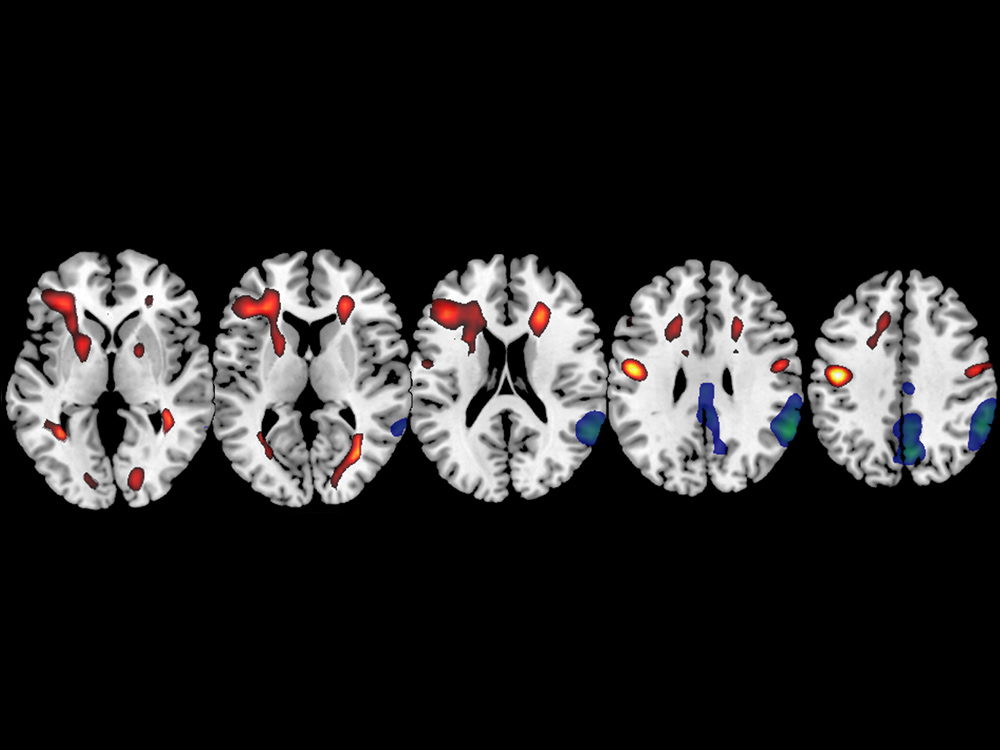
Das Gehirn beim kreativen Denken: Die Schichtenaufnahmen im MRT-Scan zeigen zunehmende Aktivität in Rot, abnehmende in Blau. Foto: Uni Graz / Benedek
Das Gehirn beim kreativen Denken: Die Schichtenaufnahmen im MRT-Scan zeigen zunehmende Aktivität in Rot, abnehmende in Blau. Foto: Uni Graz / Benedek

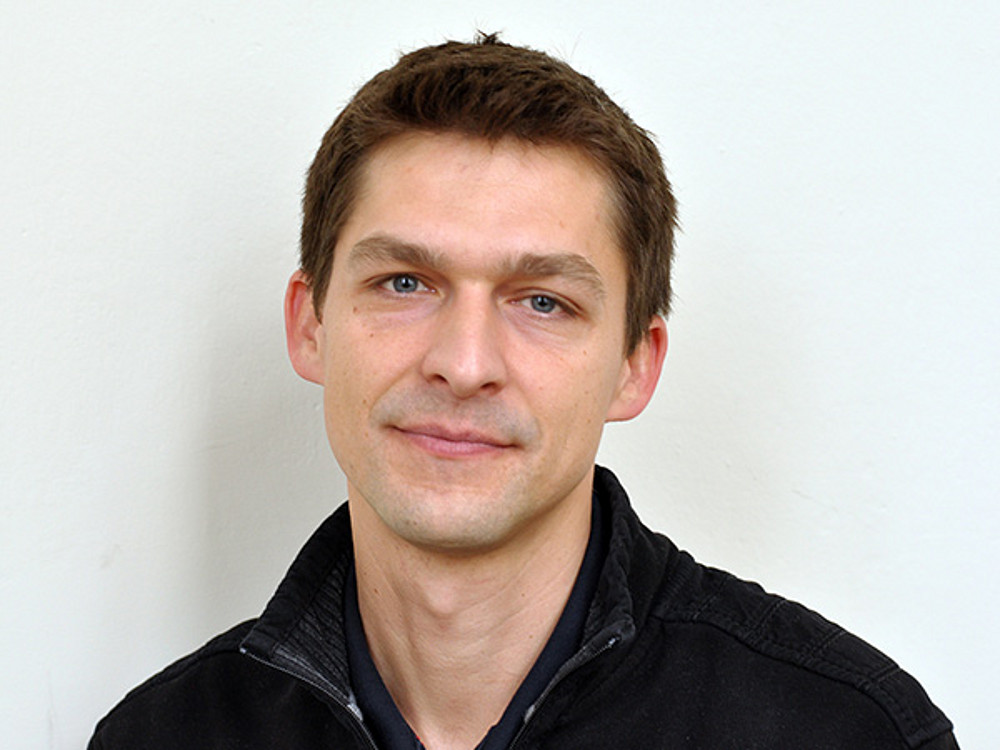
Psychologe Mathias Benedek untersucht die Vorgänge in unseren Gehirnen, wenn wir Ideen suchen. Foto: Uni Graz / Eklaude

Psychologe Mathias Benedek untersucht die Vorgänge in unseren Gehirnen, wenn wir Ideen suchen. Foto: Uni Graz / Eklaude

Psychologe der Uni Graz untersucht kreatives Denken bei MusikerInnen

Was macht besonders einfallsreiche Personen aus? Welche Möglichkeiten gibt es, quer zu denken und neue Ideen zu finden? Was geht dabei in unseren Gehirnen vor? Diesen Fragen ging Dr. Mathias Benedek vom Institut für Psychologie der Uni Graz kürzlich im Rahmen einer vom Österreichischen Wissenschaftsfonds FWF geförderten Studie an MusikerInnen nach. Projektpartnerin ist Univ.-Prof. Dr. Silke Kruse-Weber vom Institut für Instrumental- und Gesangspädagogik an der Kunstuniversität Graz. „Wir wissen, dass Offenheit, unkonventionelles Denkvermögen, technisches Können und praktische Erfahrung eine Rolle spielen“, erklärt Benedek.
Die WissenschafterInnen verglichen rund 120 Studierende aus drei unterschiedlichen  Fachrichtungen, nämlich Klassik, Jazz und Volksmusik, um detailliertere Aufschlüsse zu erhalten. Mit Hilfe von Fragebögen, einem Persönlichkeitstest und zeitlich limitierten Denkaufgaben wurden die kreativen Fähigkeiten abgefragt. Anschließend bewerteten Benedek und sein Team Menge und Originalität der geäußerten Ideen. Zudem beleuchteten sie den Berufsalltag der ProbandInnen, der sich ebenfalls auf den Einfallsreichtum auswirkt: Klassische MusikerInnen spielen in stark reglementierten Unterrichtssituationen, studieren oftmals in einem Eins-zu-Eins-Betreuungsverhältnis und streben nach technischer Perfektion. JazzerInnen hingegen arbeiten in informellen Settings und lernen, spontan auf musikalische Inputs zu reagieren. VolksmusikerInnen praktizieren eine Mischform aus geregeltem Unterricht und improvisierten Auftritten.
Im musikalischen Alltag wiesen die Jazz-MusikerInnen die höchste Konzert- und Improvisationsaktivität der drei Gruppen auf. Zudem zeigten sie eine signifikant höhere Bereitschaft, sich auf neue Situationen einzulassen, und fanden kreativere Lösungsmöglichkeiten im Test. „Im Schnitt waren bei JazzerInnen jene Eigenschaften besonders ausgeprägt, die für das Erbringen kreativer Leistungen relevant sind“, fasst Mathias Benedek zusammen.
Die Resultate der Studie fließen nun in andere Forschungsvorhaben ein. So widmet sich Benedek zusammen mit Assoz. Prof. Dr. Andreas Fink, Mag. Emanuel Jauk und Univ.-Prof. Dr. Aljoscha Neubauer vom Institut für Psychologie beispielsweise der Frage, was im Gehirn beim kreativen Denken vor sich geht. Diese Untersuchungen mittels neurowissenschaftlicher Methoden bestätigen unter anderem, dass originelle Einfälle nicht etwa aus dem Nichts kommen, sondern am Ende eines kognitiven Prozesses stehen, bei dem Bekanntes oder bereits Erlebtes im Gehirn neu verknüpft wird.
Ein Bericht über das Projekt von Mathias Benedek findet sich auch in der aktuellen Ausgabe des Forschungsmagazins UNIZEIT.

created by Dagmar Eklaude

Related news

Learning better: Can science experiments in group settings help children with autism?

How can pupils with autism spectrum disorder (ASD) have positive learning experiences and improve their social skills? Researchers at the University of Graz are investigating how science experiments in group settings can contribute to this. Initial results from the project, which is funded by the Austrian Science Fund FWF, show that children react differently depending on the kind of neurodiversity, but that experimentation classes with the right setting definitely have potential. "Pupils with ASD can do more than is currently expected of them in many cases," says project leader Uwe Simon.

Sustainability Award 2024 for two projects of the University of Graz

How do major international conferences reduce their carbon footprint? And what can maths lessons contribute to education for sustainable development? Two questions that were answered at the University of Graz. The corresponding projects were awarded the Sustainability Award 2024 in silver on 26 November in Vienna. This award for Austria's universities and colleges is presented by the Ministry of Science and the Ministry of Climate Protection.

Bees under observation: University of Graz provides unprecedented insights into the hive

What is going on in the combs? How many eggs is the queen laying? How much honey is there? Autonomous robots and AI algorithms provide important data and high-resolution real-time images from inside a beehive. "As part of an international team, we have developed a game-changer technology for a new type of digitalised behavioural research," reports biologist Thomas Schmickl from the Artifical Life Lab at the University of Graz. The publication, which has just appeared as the cover story in the journal "Science Robotics", describes the wealth of information that can be obtained from this unique research facility.

Research for healthy aging: FWF funds Cluster of Excellence "MetAGE" with 18 million euros

Six researchers from the Field of Excellence "BioHealth" at the University of Graz, together with colleagues from the Medical Universities of Graz and Vienna, have acquired an FWF-funded "Cluster of Excellence". Now a newly formed center of excellence will be created under the leadership of the University of Graz. The aim is to gain a better understanding of healthy aging. The findings will flow directly into clinical research.

Begin of page section:
Additional information:

University of Graz
Universitaetsplatz 3
8010 Graz
Austria
  • Contact
  • Web Editors
  • Moodle
  • UNIGRAZonline
  • Imprint
  • Data Protection Declaration
  • Accessibility Declaration
Weatherstation
Uni Graz

End of this page section. Go to overview of page sections

End of this page section. Go to overview of page sections

Begin of page section:

End of this page section. Go to overview of page sections