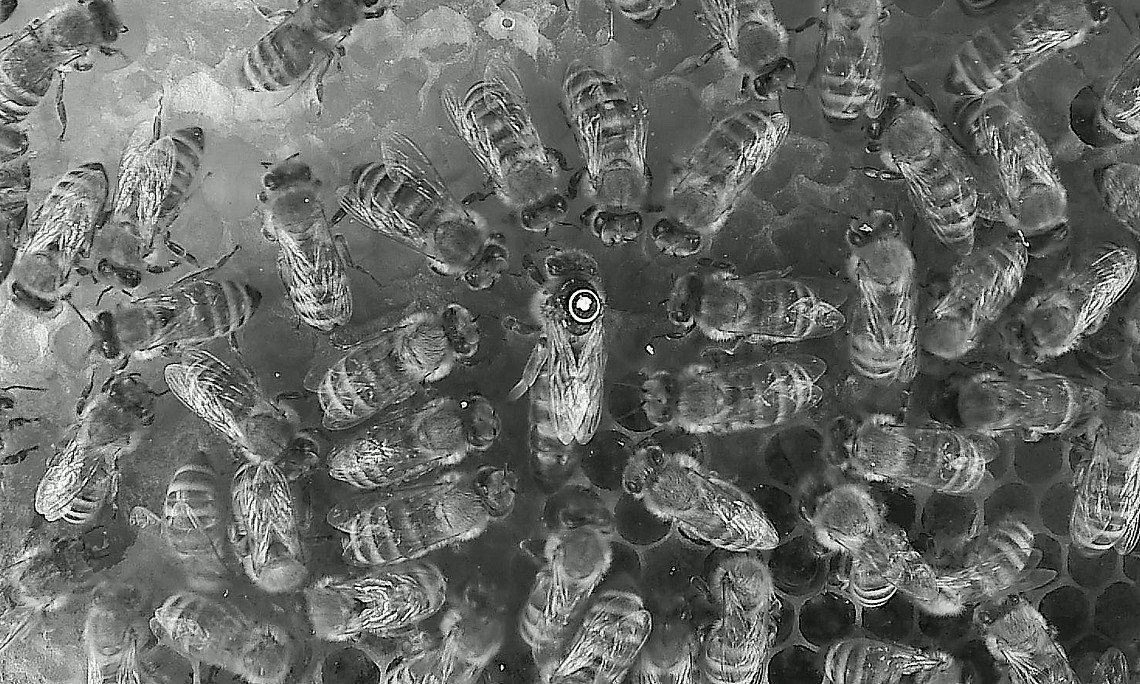



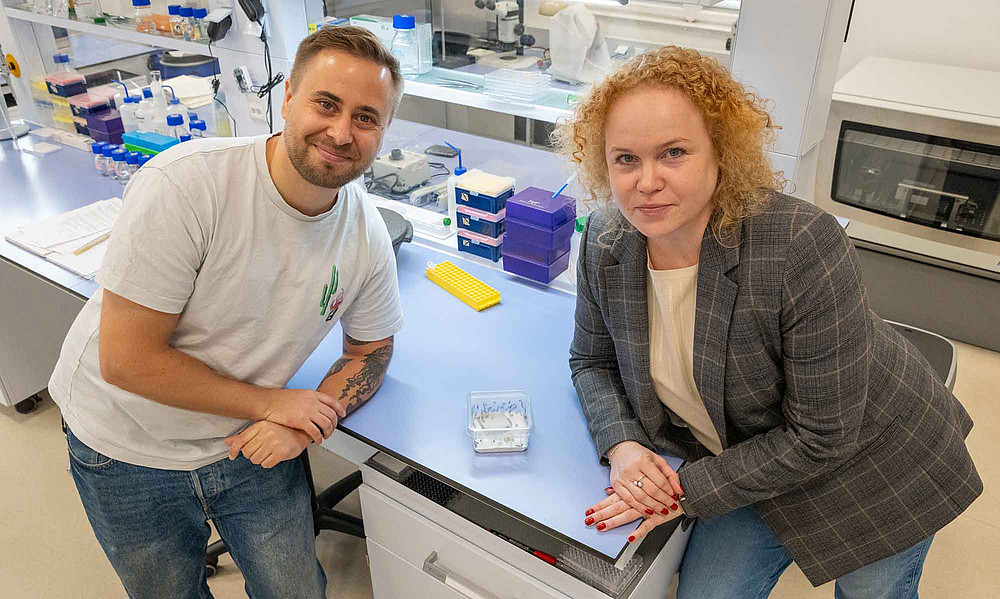
We get our medicine from the chemist’s, and our ants from the wild. When the flat-chested ant Lasius platythorax – a species that is widespread in Austria – is infected with a fungus, it supplements its diet with disinfectant hydrogen peroxide, which is found in aphids or plants, for example. This extraordinary form of self-medication has been demonstrated by a research team led by Dalial Freitak and Jason Rissanen from the Institute of Biology at the University of Graz.
“Hydrogen peroxide is harmful to healthy insects; they avoid it because of its bitter, metallic taste,” explains Dalial Freitak. In the event of an infection, however, the opposite occurs. The scientists have now unravelled the mystery of why sick insects consume a substance that is, in principle, toxic to them.
“It turned out that the activity of a gene called Malvolio changes significantly when an insect is ill, and this affects its feeding behaviour,” explains Jason Rissanen. This is because ants – which, like bees and butterflies, prefer sweet food – suddenly consume ‘bitter medicine’ when infected.
The zoologist points out that this genetic trait is also found in other animals and influences the perception of taste. This phenomenon has now been demonstrated in ants for the first time. The findings were published in the journal “Proceedings of the Royal Society B”.
In further studies, the researchers aim to examine the molecular mechanism in even greater detail and to investigate it in honeybees as well.