Begin of page section:
Page sections:

  • Go to contents (Accesskey 1)
  • Go to position marker (Accesskey 2)
  • Go to main navigation (Accesskey 3)
  • Go to sub navigation (Accesskey 4)
  • Go to additional information (Accesskey 5)
  • Go to page settings (user/language) (Accesskey 8)
  • Go to search (Accesskey 9)

End of this page section. Go to overview of page sections

Begin of page section:
Page settings:

English en
Deutsch de
Search
Login

End of this page section. Go to overview of page sections

Begin of page section:
Search:

Search for details about Uni Graz
Close

End of this page section. Go to overview of page sections


Search

Begin of page section:
Main navigation:

Page navigation:

  • University

    University
    • About the University
    • Organisation
    • Faculties
    • Library
    • Working at University of Graz
    • Campus
    Developing solutions for the world of tomorrow - that is our mission. Our students and our researchers take on the great challenges of society and carry the knowledge out.
  • Research Profile

    Research Profile
    • Our Expertise
    • Research Questions
    • Research Portal
    • Promoting Research
    • Research Transfer
    • Ethics in Research
    • Commission for Scientific Integrity
    Scientific excellence and the courage to break new ground. Research at the University of Graz creates the foundations for making the future worth living.
  • Studies

    Studies
    • Prospective Students
    • Students
  • Community

    Community
    • International
    • Location
    • Research and Business
    • Alumni
    The University of Graz is a hub for international research and brings together scientists and business experts. Moreover, it fosters the exchange and cooperation in study and teaching.
  • Spotlight
Topics
  • Sustainable University
  • Researchers answer
  • Work for us
Close menu

End of this page section. Go to overview of page sections

Begin of page section:
You are here:

University of Graz Natural sciences News Blütezeit für Chinesische Medizin
  • About the faculty
  • Our research
  • Study Service
  • Dean's office
  • Personalities

End of this page section. Go to overview of page sections

Monday, 29 April 2013

Blütezeit für Chinesische Medizin
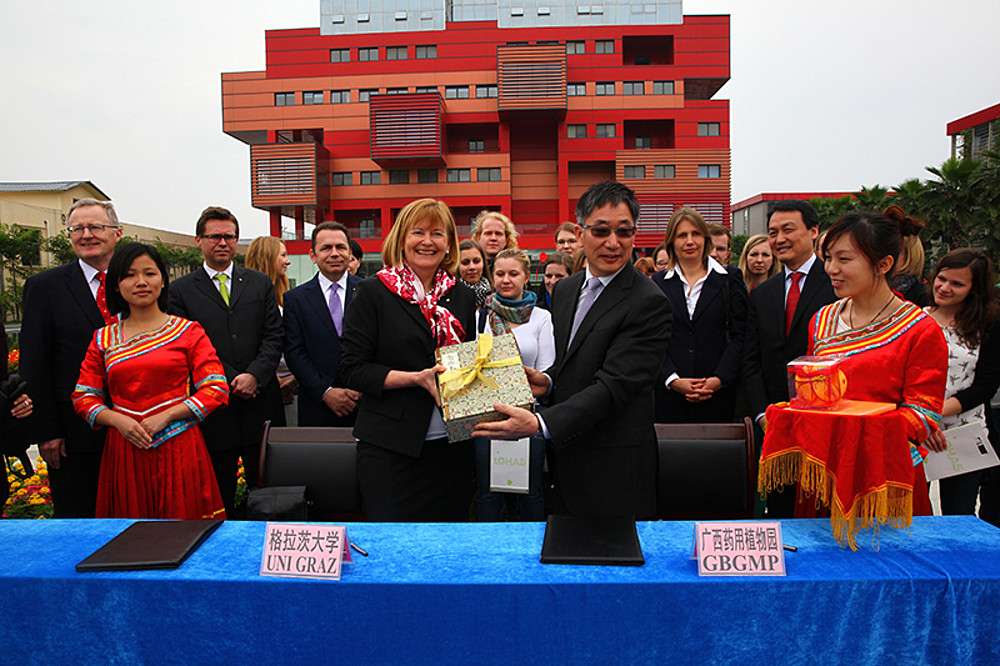
Rektorin Christa Neuper und Prof. Miao Jianhua, Direktor des Botanischen Gartens Nanning, unterzeichneten ein Kooperationsabkommen und eröffneten das neue „Joint Laboratory“ (rotes Gebäude im Hintergrund)
Rektorin Christa Neuper und Prof. Miao Jianhua, Direktor des Botanischen Gartens Nanning, unterzeichneten ein Kooperationsabkommen und eröffneten das neue „Joint Laboratory“ (rotes Gebäude im Hintergrund)

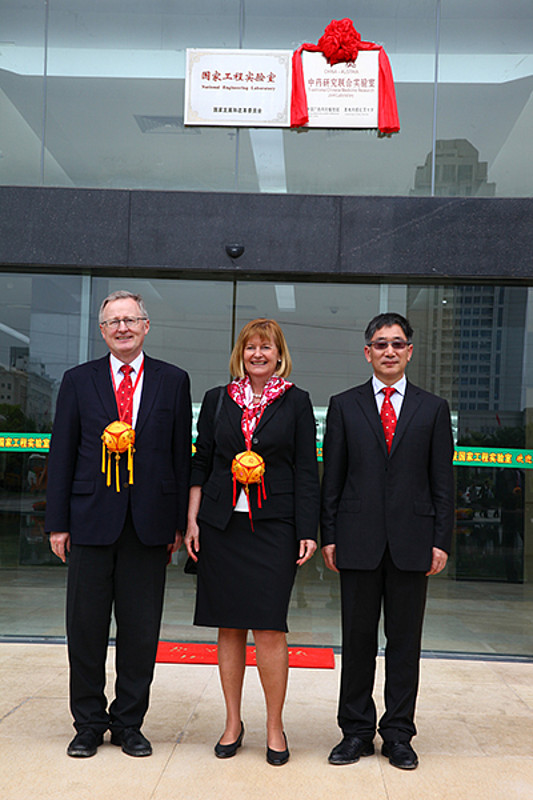
Prof. Rudolf Bauer, Rektorin Christa Neuper und Direktor Miao Jianhua (v.l.)
Prof. Rudolf Bauer, Rektorin Christa Neuper und Direktor Miao Jianhua (v.l.)

Uni Graz und weltgrößter botanischer Garten für Arzneipflanzen schließen Kooperation

Clematis und Geißblattgewächse als entzündungshemmende Arzneimittel: Das sind nur zwei Pflanzengattungen, die derzeit das Forschungszentrum für Traditionelle Chinesische Medizin (TCM) an der Uni Graz wissenschaftlich unter die Lupe nimmt. Im Rahmen des Nationalen Forschungsnetzwerkes „Drugs from Nature Targeting Inflammation“ werden die Wirkung der Medikamente aus der Natur erforscht. Dank einer neuen Kooperation mit dem weltweit größten botanischen Garten für Arzneipflanzen in Südchina werden die Aktivitäten nun ausgeweitet.

Das Interesse wächst. Arzneipflanzen aus der Traditionellen Chinesischen Medizin erleben weltweit eine Blütezeit. WissenschafterInnen des TCM-Forschungszentrums, das die Karl-Franzens-Universität in Kooperation mit der Medizinischen Universität seit 2007 betreibt, verfügen über ein hohes Maß an Know-how, das auch im TCM-Ursprungsland China enorm geschätzt wird. Rektorin Univ.-Prof. Dr. Christa Neuper konnte im April 2013 bei einem Besuch in Nanning (Südchina) die Partnerschaft vertiefen: Die Uni Graz wird künftig mit dem Guangxi Botanischen Garten für Arzneipflanzen, mit mehr als 7.000 Arten der größte der Welt, noch enger zusammenarbeiten. In einem Joint-Laboratory bündeln die Uni Graz und die chinesische Forschungsinstitution die Arbeiten, nutzen Geräte gemeinsam und tauschen ihr Wissen aus. „Neben den PharmazeutInnen soll in Zukunft auch der Botanische Garten der Uni Graz in den Wissenstransfer eingebunden werden“, erklärt Rektorin Neuper.

Entzündungshemmende Wirkstoffe
Eine der zahlreichen Gewächse, die derzeit im Rahmen des Projektes „Drugs from Nature Targeting Inflammation“ – Teil des Nationalen Forschungsnetzwerkes des Wissenschaftsfonds FWF – erforscht werden, ist die chinesische Pflanzengattung Notopterygium. „Es gibt zahlreiche Hinweise auf entzündungshemmende Substanzen, aber auch bereits nachgewiesene positive Wirkungen auf den Stoffwechsel, welche bei der Diabetes-Therapie eine Rolle spielen könnten“, so Univ.-Prof. Dr. Rudolf Bauer, Leiter des Instituts für Pharmazeutische Wissenschaften sowie des TCM-Forschungszentrums. Weitere medizinisch wirksame Stoffe werden in Clematis-und Lonicera-Arten vermutet.

Joint-Laboratory
„Auf rund 20.000 Quadratmetern stehen im Joint-Laboratory Geräte und Infrastruktur nach modernstem Standard zur Verfügung“, beschreibt Bauer. Auf der enormen Artendichte auf dem 220 Hektar großen Gelände können die ForscherInnen aus dem Vollen schöpfen, wissenschaftliche Publikationen werden gemeinsam veröffentlicht. Zudem soll der Austausch von WissenschafterInnen und Studierenden vorangetrieben werden. Erfolgreiche Beispiele dafür gibt es bereits: Grazer Studierende besuchen unter der Leitung von Pharmazie-Professor Bauer regelmäßig die von ihm organisierte Sino-Austrian Summerschool for Chinese Herbal Medicine in Nanning. 28 TeilnehmerInnen überreichte Rektorin Neuper jüngst bei ihrem Vor-Ort-Besuch die Zertifikate.

Österreichischer Garten in China
Weitere sichtbare Zeichen des Zusammenwachsens sind sowohl ein unterfertigtes Kooperationsabkommen als auch erste Pflanzungen österreichischer Flora im Botanischen Garten in Nanning. Auf etwa 1.000 Quadratmetern sollen heimische Arzneigewächse, wie Baldrian und Weißdorn, angesiedelt werden.

created by Andreas Schweiger

Related news

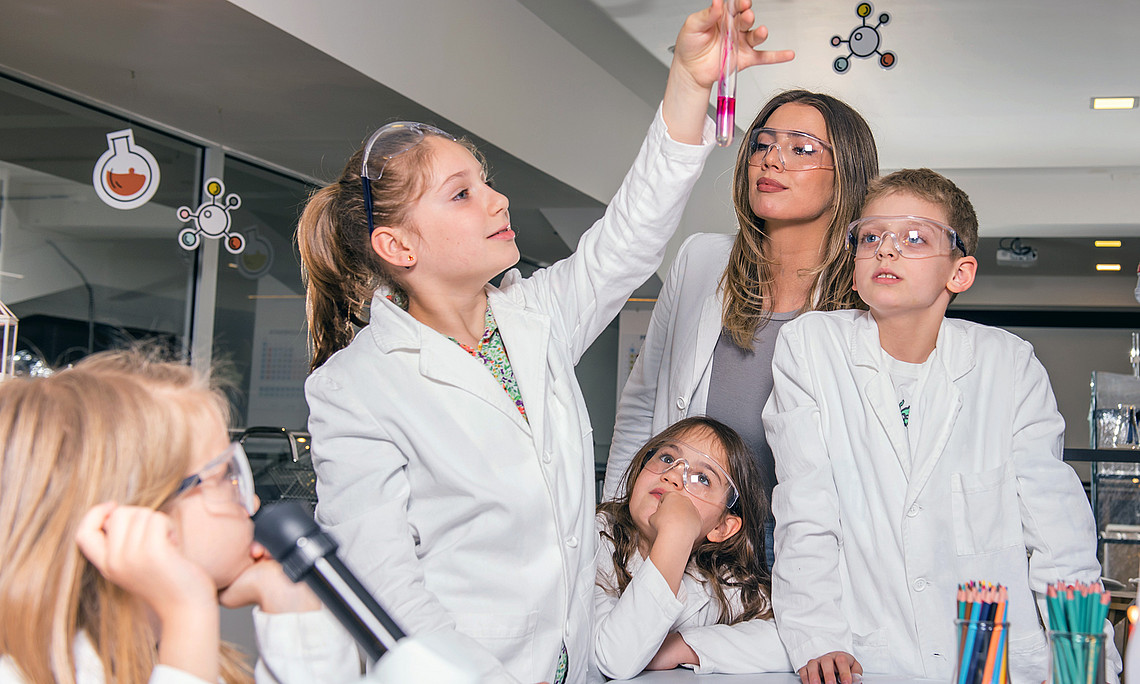
Learning better: Can science experiments in group settings help children with autism?

How can pupils with autism spectrum disorder (ASD) have positive learning experiences and improve their social skills? Researchers at the University of Graz are investigating how science experiments in group settings can contribute to this. Initial results from the project, which is funded by the Austrian Science Fund FWF, show that children react differently depending on the kind of neurodiversity, but that experimentation classes with the right setting definitely have potential. "Pupils with ASD can do more than is currently expected of them in many cases," says project leader Uwe Simon.

Sustainability Award 2024 for two projects of the University of Graz

How do major international conferences reduce their carbon footprint? And what can maths lessons contribute to education for sustainable development? Two questions that were answered at the University of Graz. The corresponding projects were awarded the Sustainability Award 2024 in silver on 26 November in Vienna. This award for Austria's universities and colleges is presented by the Ministry of Science and the Ministry of Climate Protection.

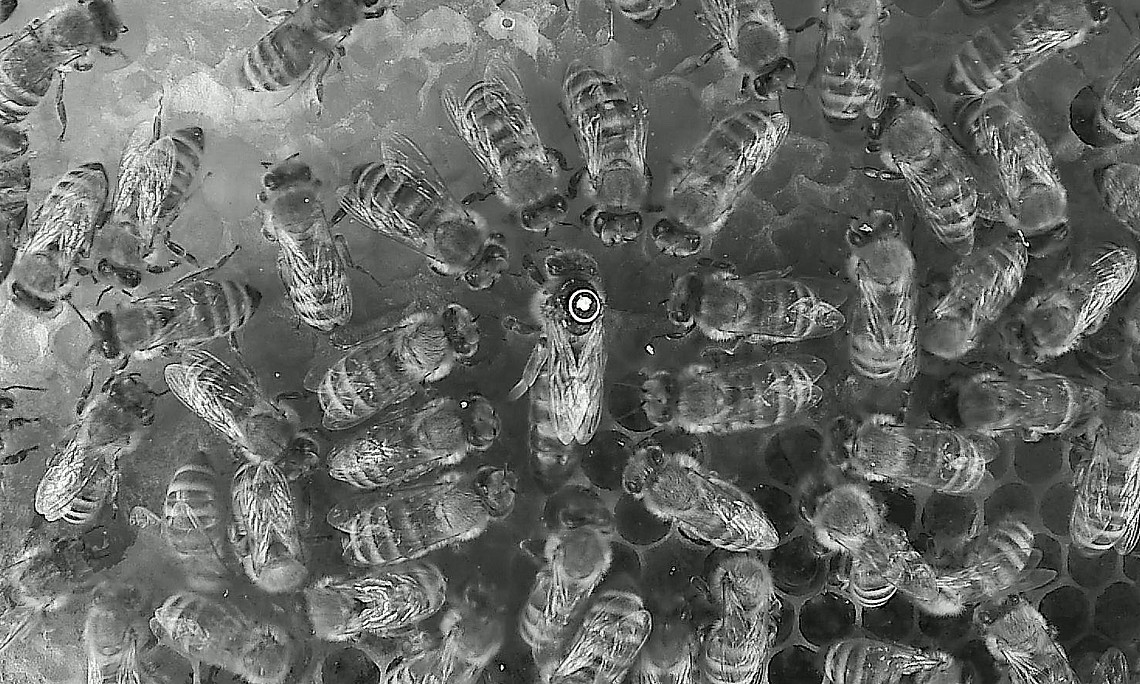
Bees under observation: University of Graz provides unprecedented insights into the hive

What is going on in the combs? How many eggs is the queen laying? How much honey is there? Autonomous robots and AI algorithms provide important data and high-resolution real-time images from inside a beehive. "As part of an international team, we have developed a game-changer technology for a new type of digitalised behavioural research," reports biologist Thomas Schmickl from the Artifical Life Lab at the University of Graz. The publication, which has just appeared as the cover story in the journal "Science Robotics", describes the wealth of information that can be obtained from this unique research facility.

Research for healthy aging: FWF funds Cluster of Excellence "MetAGE" with 18 million euros

Six researchers from the Field of Excellence "BioHealth" at the University of Graz, together with colleagues from the Medical Universities of Graz and Vienna, have acquired an FWF-funded "Cluster of Excellence". Now a newly formed center of excellence will be created under the leadership of the University of Graz. The aim is to gain a better understanding of healthy aging. The findings will flow directly into clinical research.

Begin of page section:
Additional information:

University of Graz
Universitaetsplatz 3
8010 Graz
Austria
  • Contact
  • Web Editors
  • Moodle
  • UNIGRAZonline
  • Imprint
  • Data Protection Declaration
  • Accessibility Declaration
Weatherstation
Uni Graz

End of this page section. Go to overview of page sections

End of this page section. Go to overview of page sections

Begin of page section:

End of this page section. Go to overview of page sections