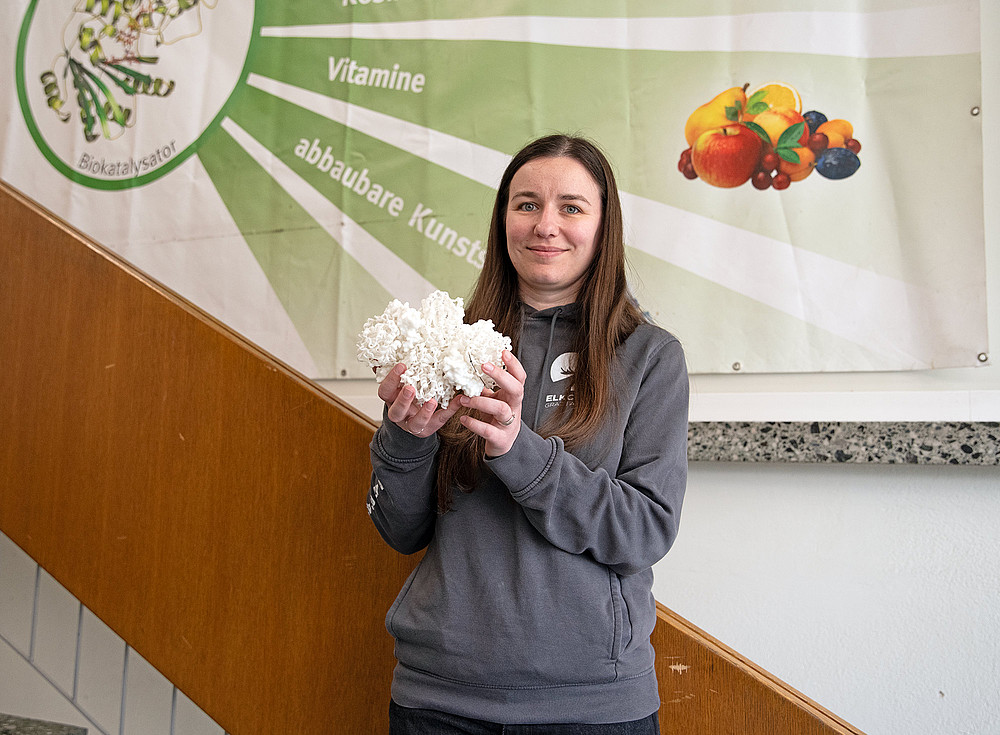
“The enzyme we have discovered and are using in our research is produced by a bacterium,” explains Lilla Gal. The reaction requires nothing more than an aqueous solution and temperatures of around 30 degrees Celsius – so no chemicals or large amounts of energy are needed. The newly discovered tool can, for example, produce a substance for a malaria drug in a single step, and without any by-products whatsoever. “Conventional methods generate around 60 per cent waste. This perfect result surprised even us,” reports Gal’s PhD supervisor, Wolfgang Kroutil.
The enzyme can also be used for the production of antifeedants or antibacterial compounds. In the next step, Gal is now attempting to enable the production of further chemical compounds by manipulating the tool.
Gal’s project is part of the European Marie Curie Training Network “BioDeCCodiNNg”, which focuses on finding new and more environmentally friendly ways to create bonds between atoms. The focus is on bonds between carbon or nitrogen atoms. Enzymes, nature’s tools, can usually facilitate such reactions in a particularly environmentally friendly and efficient manner.