Begin of page section:
Page sections:

  • Go to contents (Accesskey 1)
  • Go to position marker (Accesskey 2)
  • Go to main navigation (Accesskey 3)
  • Go to sub navigation (Accesskey 4)
  • Go to additional information (Accesskey 5)
  • Go to page settings (user/language) (Accesskey 8)
  • Go to search (Accesskey 9)

End of this page section. Go to overview of page sections

Begin of page section:
Page settings:

English en
Deutsch de
Search
Login

End of this page section. Go to overview of page sections

Begin of page section:
Search:

Search for details about Uni Graz
Close

End of this page section. Go to overview of page sections


Search

Begin of page section:
Main navigation:

Page navigation:

  • University

    University
    • About the University
    • Organisation
    • Faculties
    • Library
    • Working at University of Graz
    • Campus
    Developing solutions for the world of tomorrow - that is our mission. Our students and our researchers take on the great challenges of society and carry the knowledge out.
  • Research Profile

    Research Profile
    • Our Expertise
    • Research Questions
    • Research Portal
    • Promoting Research
    • Research Transfer
    • Ethics in Research
    • Commission for Scientific Integrity
    Scientific excellence and the courage to break new ground. Research at the University of Graz creates the foundations for making the future worth living.
  • Studies

    Studies
    • Prospective Students
    • Students
    • Registration for Study Programme (Winter semester 2026/27)
  • Community

    Community
    • International
    • Location
    • Research and Business
    • Alumni
    The University of Graz is a hub for international research and brings together scientists and business experts. Moreover, it fosters the exchange and cooperation in study and teaching.
Topics
  • Sustainable University
  • Researchers answer
  • Work for us
Close menu

End of this page section. Go to overview of page sections

Begin of page section:
You are here:

University of Graz Natural sciences News Überlebensstrategien: Wie Pflanzen auf Trockenheit reagieren
  • About the faculty
  • Our research
  • Study Service
  • Dean's office
  • Personalities

End of this page section. Go to overview of page sections

Tuesday, 09 June 2026

Survival strategies: How plants respond to drought

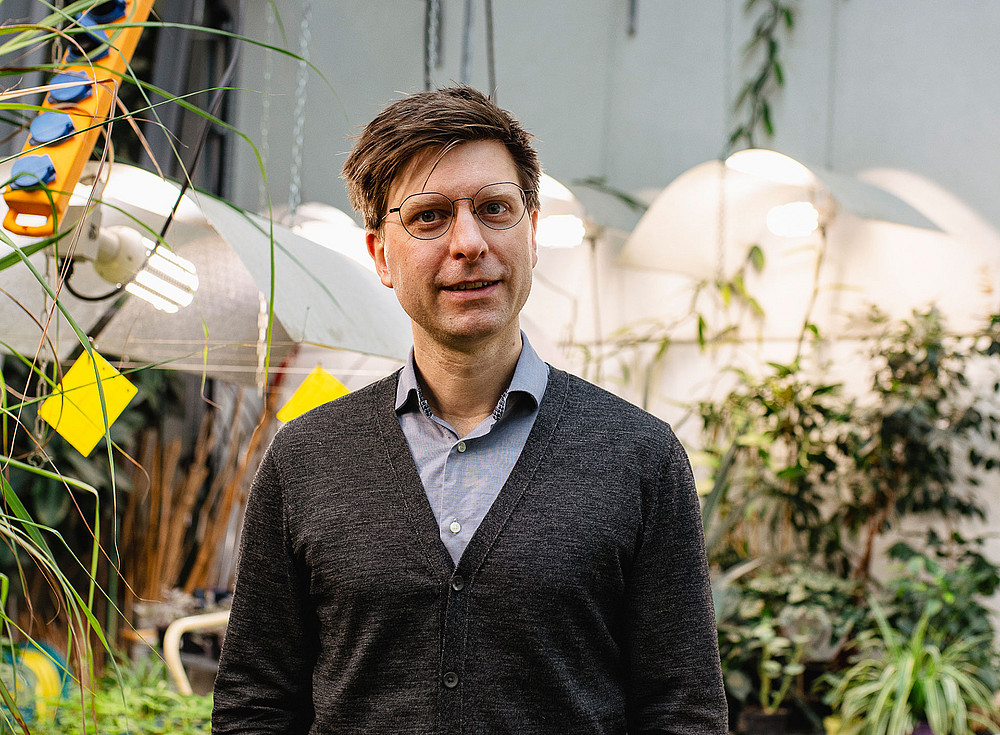
Johannes Liesche in front of plants ©Uni Graz/Tzivanopoulos
©Uni Graz/Tzivanopoulos

Johannes Liesche is investigating which genetic factors regulate sugar transport in plants, particularly in relation to changing environmental conditions and stress responses. Photo: University of Graz/Tzivanopoulos

According to Geosphere Austria, this spring was the driest in Austria since records began around 170 years ago. The low rainfall put particular pressure on the agricultural sector. And climate change is set to make the situation even worse in the coming decades. We asked Johannes Liesche, a professor at the Department of Biology at the University of Graz, how plants react to water shortages and how they survive periods of drought.


Plants have several strategies for protecting themselves from dehydration. “First of all, they close the stomata on their leaves to reduce transpiration,” says Johannes Liesche, head of the Plant Cell and Stress Biology Research Group at the University of Graz. This means that significantly less water escapes, but also that hardly any CO2 is taken up for photosynthesis. “As a result, the plant produces less sugar and its productivity declines. The remaining energy is increasingly channelled into root growth to penetrate deeper, moister layers,” explains the researcher.

During prolonged drought, the entire life cycle adapts. The growth phase is shortened. “Depending on when the drought occurs, many plants flower earlier or for a shorter period and form seeds more quickly to give the next generation a chance,” says Liesche. Fruits remain smaller or fail to form at all.

Some plants cope better with drought than others. “Vines root up to six metres deep and can thus still reach water, even if it hasn’t rained for a long time,” the researcher gives as an example, adding: “Others reduce transpiration through small, thick, leathery leaves. In some, the stomata are situated deeper and are thus sheltered from the wind, which further reduces evaporation.

Furthermore, plants adapt to changing environmental conditions through molecular mechanisms. These alter the composition of cell membranes and cytoplasm to maintain structural integrity. New findings in this area are of high interest, particularly with regard to the breeding of drought-resistant varieties for agriculture.

In a project, Liesche and his research group investigated how molecular signalling pathways can be fine-tuned so that a plant reacts more quickly or strongly to drought. For the scientist, genetic engineering is anything but a bogeyman: “With new genomic technologies (NGT), the plant’s own genes are modified. This also happens in traditional breeding. The advantage of NGT is that the desired characteristics of a plant can be achieved more quickly. But the result is essentially the same.” The researcher is convinced: “If we want our familiar food in future, there is no way around plant breeding with NGT.”

The research team behind the KLIWAS – Water in a Changing Climate study, which is funded by the Ministry of Agriculture, also highlights the need to place greater emphasis on drought-resistant varieties in agriculture in future.

If you want to learn more about the fascinating world of plants, you can study Biology at the University of Graz.

created by Gudrun Pichler

Related news

Learning better: Can science experiments in group settings help children with autism?

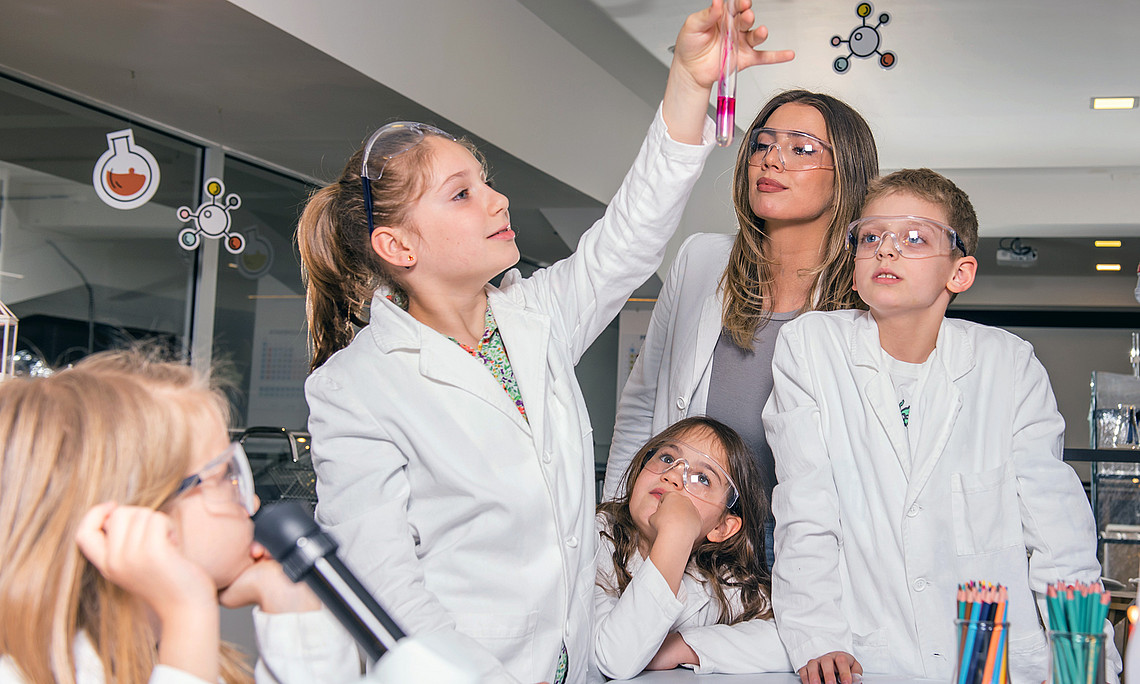
How can pupils with autism spectrum disorder (ASD) have positive learning experiences and improve their social skills? Researchers at the University of Graz are investigating how science experiments in group settings can contribute to this. Initial results from the project, which is funded by the Austrian Science Fund FWF, show that children react differently depending on the kind of neurodiversity, but that experimentation classes with the right setting definitely have potential. "Pupils with ASD can do more than is currently expected of them in many cases," says project leader Uwe Simon.

Sustainability Award 2024 for two projects of the University of Graz

How do major international conferences reduce their carbon footprint? And what can maths lessons contribute to education for sustainable development? Two questions that were answered at the University of Graz. The corresponding projects were awarded the Sustainability Award 2024 in silver on 26 November in Vienna. This award for Austria's universities and colleges is presented by the Ministry of Science and the Ministry of Climate Protection.

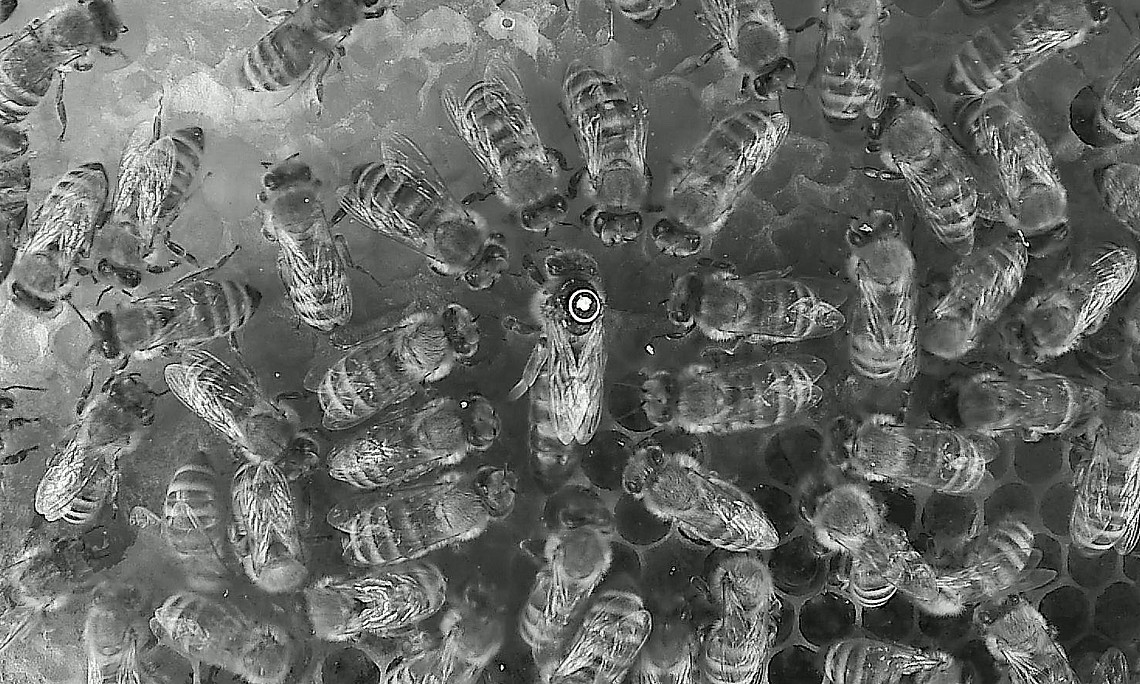
Bees under observation: University of Graz provides unprecedented insights into the hive

What is going on in the combs? How many eggs is the queen laying? How much honey is there? Autonomous robots and AI algorithms provide important data and high-resolution real-time images from inside a beehive. "As part of an international team, we have developed a game-changer technology for a new type of digitalised behavioural research," reports biologist Thomas Schmickl from the Artifical Life Lab at the University of Graz. The publication, which has just appeared as the cover story in the journal "Science Robotics", describes the wealth of information that can be obtained from this unique research facility.

Research for healthy aging: FWF funds Cluster of Excellence "MetAGE" with 18 million euros

Six researchers from the Field of Excellence "BioHealth" at the University of Graz, together with colleagues from the Medical Universities of Graz and Vienna, have acquired an FWF-funded "Cluster of Excellence". Now a newly formed center of excellence will be created under the leadership of the University of Graz. The aim is to gain a better understanding of healthy aging. The findings will flow directly into clinical research.

Begin of page section:
Additional information:

University of Graz
Universitaetsplatz 3
8010 Graz
Austria
  • Contact
  • Web Editors
  • Moodle
  • UNIGRAZonline
  • Imprint
  • Data Protection Declaration
  • Accessibility Declaration
Weatherstation
Uni Graz

End of this page section. Go to overview of page sections

End of this page section. Go to overview of page sections

Begin of page section:

End of this page section. Go to overview of page sections